
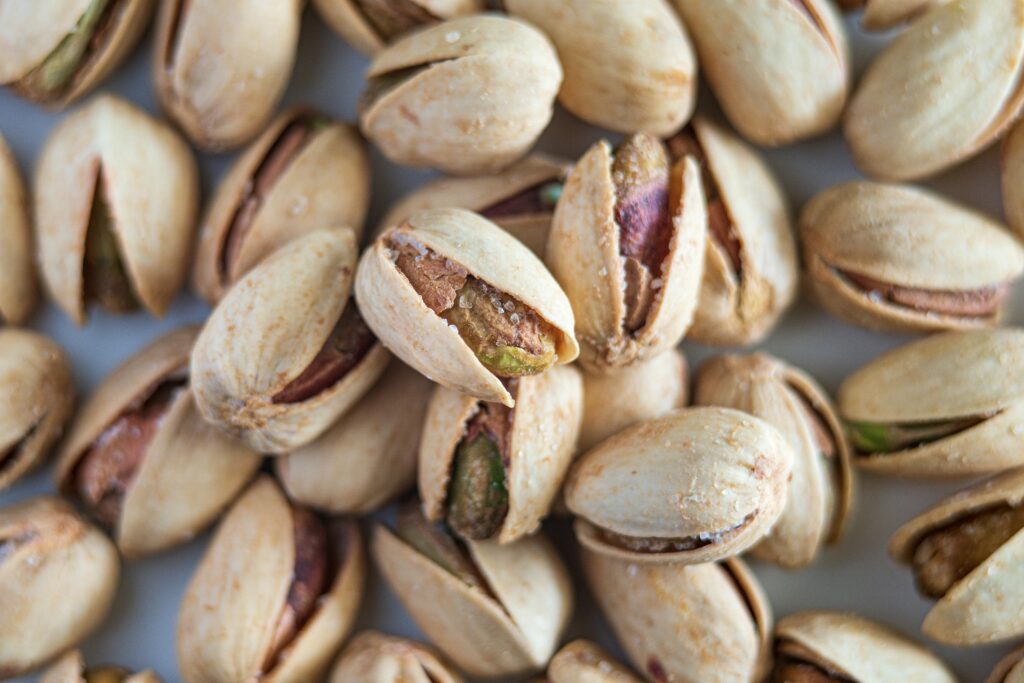
Pistachio nuts are rich in vitamins, essential minerals, and healthy fats. They’re nutritious and have a high-fat-to-low-carb ratio, making them an ideal keto-friendly nut. in this blog post you will get to discover pistachio health benefits — from heart health to weight loss. Learn why pistachios are nature’s ultimate superfood for wellness.
8 amazing Benefits of eating pistachios : Why Pistachios Deserve a Spot in Your Daily Wellness Routine ?
Pistachio nuts are abundant in vitamins, vital minerals, and beneficial fats. They are nutritious and possess a high-fat-to-low-carb ratio, making them a perfect nut for a keto diet.
1.Nutrient-Dense
Similar to many nuts, pistachios are extremely nutritious.
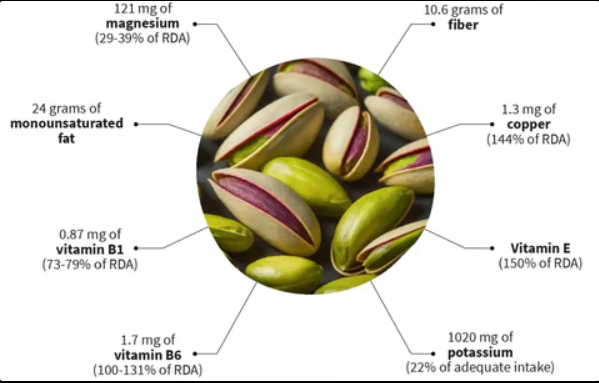
Pistachio nuts provide a wealth of vitamins and minerals, such as vitamins B1, B6, and E, along with zinc, magnesium, and potassium.
Nearly all the fats present in pistachio nuts are heart-healthy monounsaturated fats and anti-inflammatory omega-3 fatty acids, including alpha-linolenic acid , which is associated with a reduced risk of heart disease and maintaining healthy cholesterol levels.
Zinc, magnesium, and potassium are crucial minerals that enhance your health. These nutrients support optimal brain function, bolster your immune system, and are vital for energy metabolism.
2. Low Oxalate Content
Pistachios rank among the nuts with the lowest oxalate levels, making them a smart choice for those susceptible to kidney stones. Oxalates are compounds found in various plant-based foods.
*Some individuals may be sensitive to oxalates and could experience joint and bone discomfort, inflammation, and cloudy urine when they consume foods high in oxalates.
3. Heart health
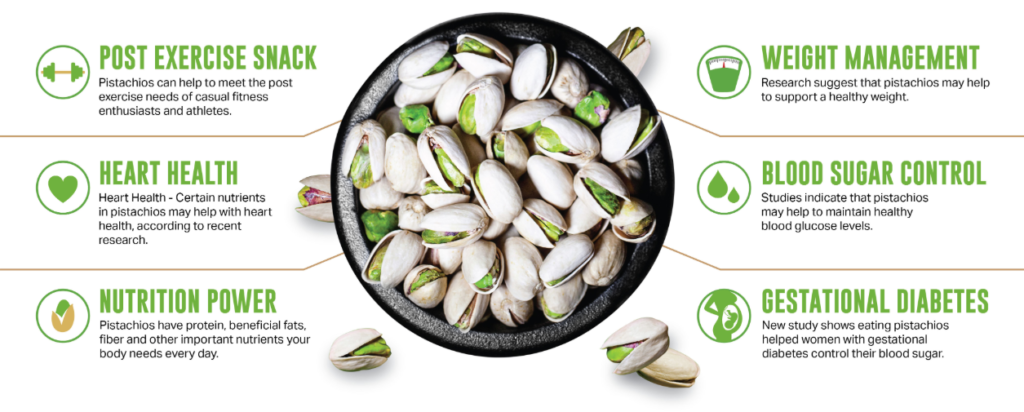
Pistachio nuts provide a beneficial source of healthy polyunsaturated and monounsaturated fats that may aid in lowering the risk of heart disease.
These nuts are rich in antioxidants like vitamin E, selenium, and phenolic compounds. Such nutrients are naturally occurring in pistachios and are typically found in foods that promote overall cardiovascular health.

4. Weight management
A study featured in a Nutrition Journal indicates that daily consumption of pistachios improves metabolic health and supports maintaining a healthy weight.
Pistachios are also an excellent source of protein and fiber, which promote feelings of fullness and satisfaction, aiding in both weight loss and maintenance.
5. Blood sugar control
Incorporating pistachios into your diet is a beneficial strategy for promoting healthy blood sugar levels and may lower the risk of developing metabolic syndrome and type 2 diabetes.
Pistachios offer a combination of protein, fiber, and antioxidants that can help slow down the absorption of sugars.
Research published in the Journal of Nutritional Science backs this up, emphasizing that adding pistachios to daily meals may affect the body’s insulin response and help maintain stable blood sugar levels.
6. Eye health
Pistachios provide a valuable source of lutein, a powerful antioxidant essential for maintaining eye health.
Lutein safeguards the sensitive components of your eyes from free radicals, which are metabolic by-products that lead to inflammation and cellular harm.
Regular intake of foods rich in lutein supports eye health and significantly reduces the risk of macular degeneration, a major cause of blindness.
7. Digestive health
Incorporating pistachios into your diet is a fantastic way to enhance digestive health. They are abundant in dietary fiber, a prebiotic that nourishes beneficial bacteria in your intestines(gut)
These intestinal bacteria metabolize dietary fiber to generate butyric acid, a short-chain fatty acid that provides energy for gut microbes. This substance is linked to promoting digestive health and may assist in maintaining a balanced gut environment.
8. Cognitive health
Pistachios are rich in B vitamins, especially vitamin B6. Vitamin B6 promotes neuronal health and protects brain cells from oxidative damage, lowering the risk of age-related cognitive decline.
Vitamin B6 is needed to produce serotonin and dopamine, two essential neurotransmitters that promote a calm central nervous system and support stable moods.
4. Weight management
A study featured in a Nutrition Journal indicates that daily consumption of pistachios improves metabolic health and supports maintaining a healthy weight.
Pistachios are also an excellent source of protein and fiber, which promote feelings of fullness and satisfaction, aiding in both weight loss and maintenance.
5. Blood sugar control
Incorporating pistachios into your diet is a beneficial strategy for promoting healthy blood sugar levels and may lower the risk of developing metabolic syndrome and type 2 diabetes.
Pistachios offer a combination of protein, fiber, and antioxidants that can help slow down the absorption of sugars.
Research published in the Journal of Nutritional Science backs this up, emphasizing that adding pistachios to daily meals may affect the body’s insulin response and help maintain stable blood sugar levels.
6. Eye health
Pistachios provide a valuable source of lutein, a powerful antioxidant essential for maintaining eye health.
Lutein safeguards the sensitive components of your eyes from free radicals, which are metabolic by-products that lead to inflammation and cellular harm.
Regular intake of foods rich in lutein supports eye health and significantly reduces the risk of macular degeneration, a major cause of blindness.
7. Digestive health
Incorporating pistachios into your diet is a fantastic way to enhance digestive health. They are abundant in dietary fiber, a prebiotic that nourishes beneficial bacteria in your intestines(gut)
These intestinal bacteria metabolize dietary fiber to generate butyric acid, a short-chain fatty acid that provides energy for gut microbes. This substance is linked to promoting digestive health and may assist in maintaining a balanced gut environment.
8. Cognitive health
Pistachios are rich in B vitamins, especially vitamin B6. Vitamin B6 promotes neuronal health and protects brain cells from oxidative damage, lowering the risk of age-related cognitive decline.
Vitamin B6 is needed to produce serotonin and dopamine, two essential neurotransmitters that promote a calm central nervous system and support stable moods.
Best season to consume pistachios
Pistachios are suitable for the monsoon season (July-September) when they are lightly roasted, as they help with digestion and provide a sense of lightness in humid conditions.
Pistachios are particularly beneficial for fertility and overall wellness.
The ideal season to take pistachios is winter, a time when your body instinctively seeks out nutrient-rich, warming foods.
The optimal time to eat pistachios is in the afternoon to avoid energy dips and enhance digestion.